
Rabbits, Chickens, and Goats: Post-War Rural France
/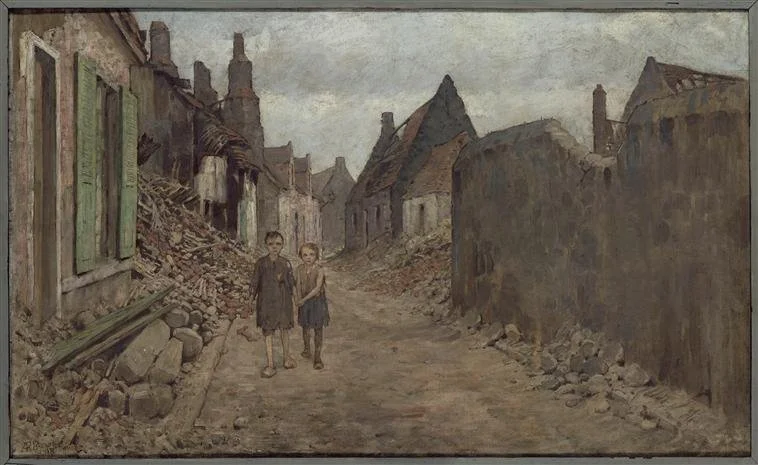
Anna Richards Brewster, An Unhappy Childhood: In Search of a Home, oil on canvas, Franco-American Museum Château de Blérancourt
In 1914, France was still predominantly an agricultural nation. While the country had some 5,400,000 people working in agriculture on the eve of the conflict, the first world war mobilized nearly two million of them for an extended period. According to the French Ministry of Agriculture and Food Sovereignty, between 1914 and 1918, 550,000 farmers were killed in combat, while another 500,000 returned home wounded.
Along with Nord–Pas-de-Calais and the Paris region, Picardy, where Anne Morgan, the American philanthropist, and the volunteers of the American Committee for Devastated France (ACDF) carried out most of their work, was one of France's most productive agricultural regions before the war. Picardy was France’s breadbasket. It supplied 20% of the wheat, 25% of the oats, and 50% of the sugar.
When the first Americans arrived in July 1917, they discovered totally devastated lands, “battlefields strewn with barbed wire, corpses, and ruins everywhere," explained Valérie Lagier, Chief Curator of the Franco-American Museum at the Château de Blérancourt, during a presentation at the 2026 Oxford Food Symposium.
After establishing an aid system centered on dignity and self-reliance, it was time for ACDF to restore agriculture, transforming emergency relief into long-term recovery. The challenge was immense: with nearly one-third of France's horses requisitioned during the war, farmers had lost the very animals that powered their fields. Mechanized farming was introduced, yet remained out of reach for most. "Individual farmers could not afford such expensive equipment, the tractors were shared collectively and made available to all members, allowing agriculture to recover more quickly through modern farming methods," Lagier said.
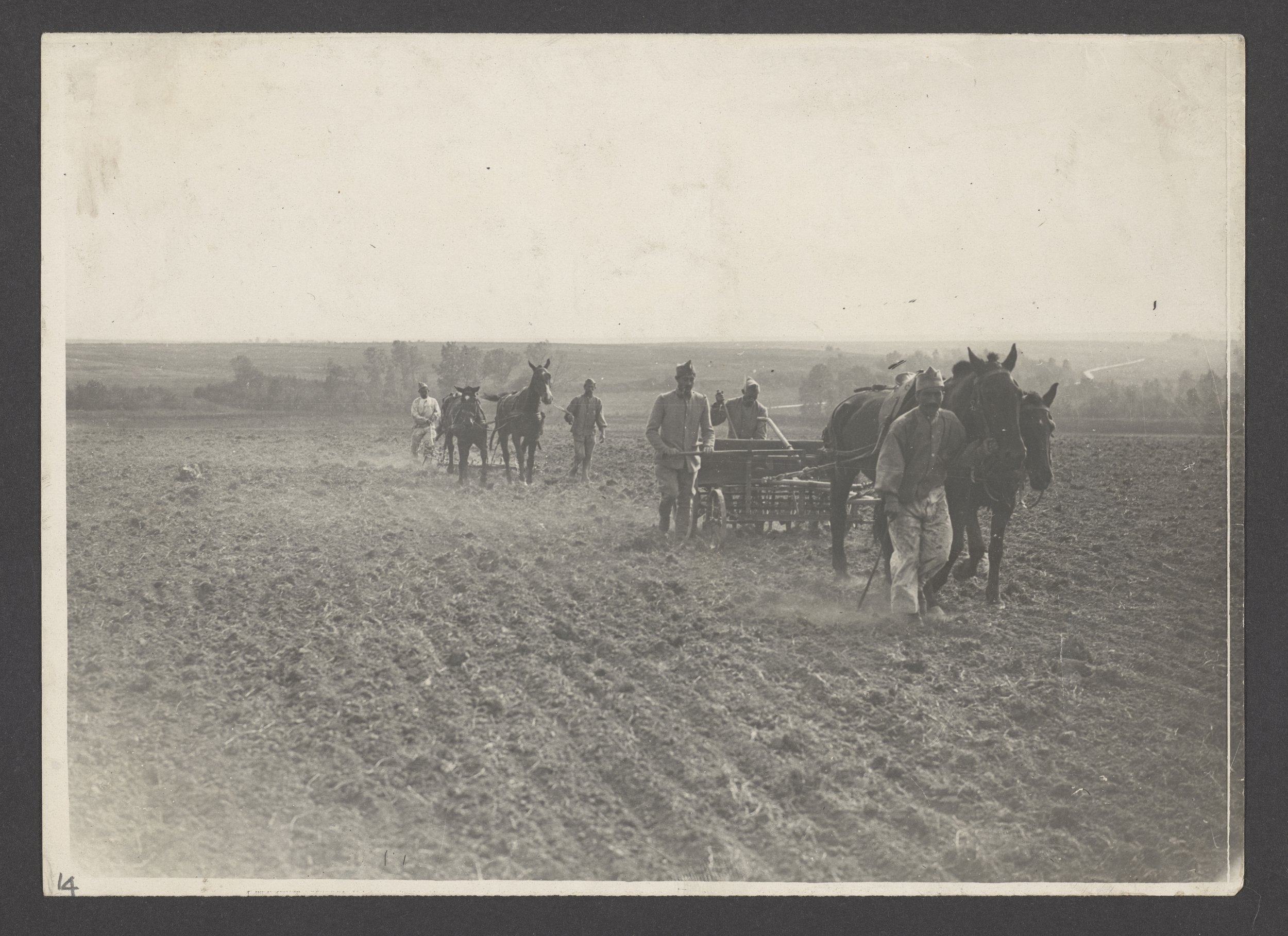
The first plowing in Blérancourt in 1917.
American Committee for Devastated France (ACDF) photograph, Franco-American Museum Château de Blérancourt
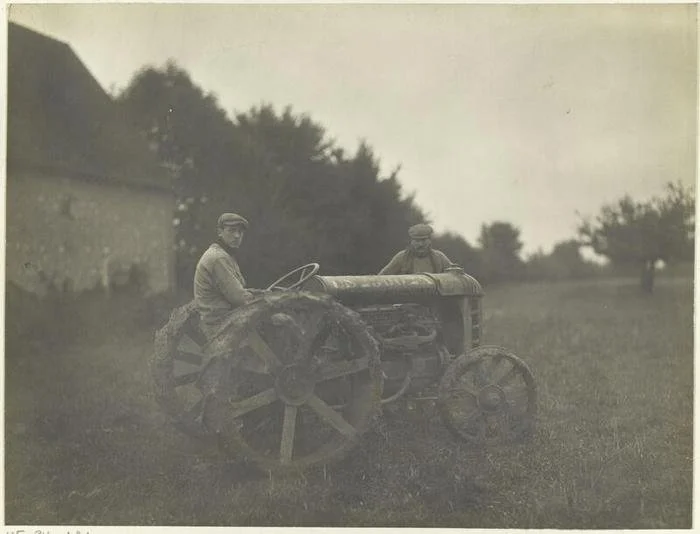
The first Ford tractors at the Villeneuve-la-Hurée farm in 1918.
ACDF photograph, Franco-American Museum Château de Blérancourt
"By the end of the war, there were virtually no farm animals left. Most had either been killed or requisitioned by the German army," Lagier added, introducing another priority: restocking the countryside with rabbits, chickens, and goats, giving families the means to begin again.
To illustrate this effort, Valérie shared two particular initiatives:
The first was the Chicken Fund, imagined by a student at Smith College, Massachusetts. For just ten cents, Americans could sponsor a chick that would hatch in France and receive a small pin reading, "I Have a Chicken in France." The campaign raised enough money to send an incubator to the devastated regions, and the student eventually traveled to France herself, teaching local children and families how to raise poultry. The goal was not simply to provide chickens, but to help communities rebuild their independence, Lagier said.
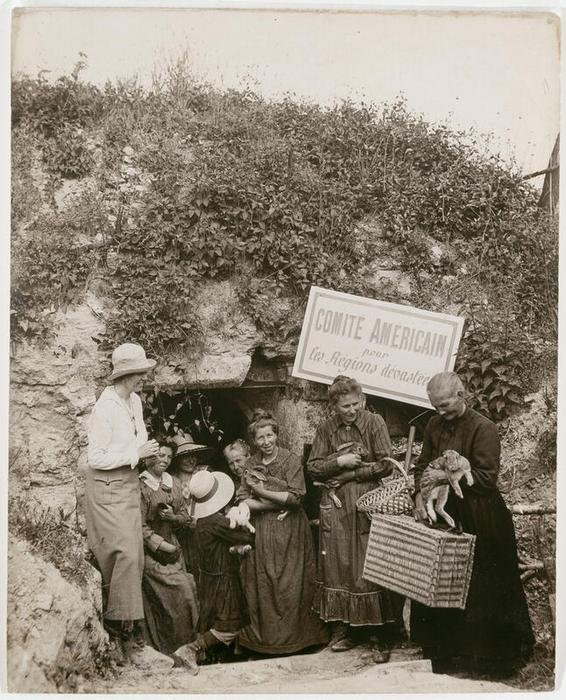
Mrs. Arthur Ellis Ham distributing the first rabbits in Blérancourt in 1919.
ACDF photograph, Franco-American Museum Château de Blérancourt
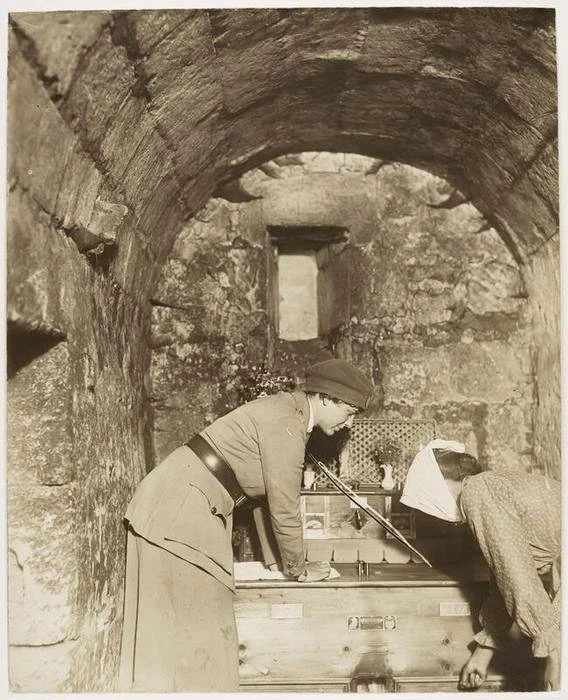
Lucy Hewitt demonstrating how the chick incubator works to a young boy in Vic-sur-Aisne in 1919.
ACDF photograph, Franco-American Museum Château de Blérancourt
The second was Mary Breckinridge's Goat Fund. While serving as a nurse and midwife with the ACDF, Breckinridge cared for undernourished infants whose mothers often lacked enough milk to feed them. She launched a campaign to purchase goats for families in need, giving children access to fresh milk. Donors in the United States could even name and follow the progress of the goat they had sponsored, creating a deeply personal bond between American supporters and French families. Breckinridge also revived and expanded La Goutte de Lait, an existing French milk distribution program, extending its reach throughout the devastated regions.
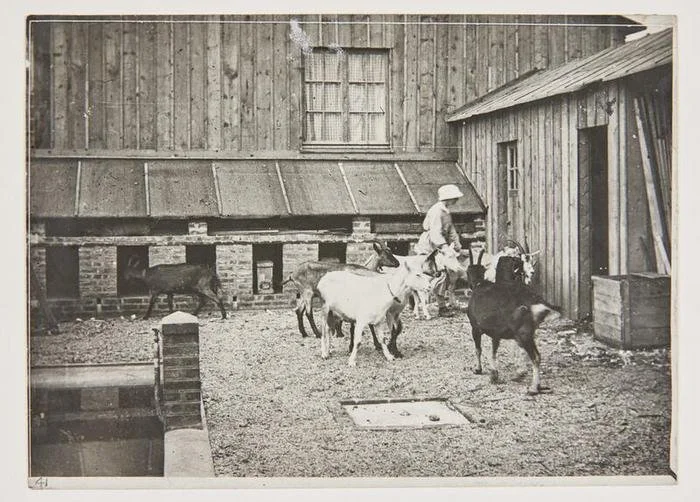
The first goats at the Château de Blérancourt in 1917.
ACDF photograph, Franco-American Museum Château de Blérancourt
In parallel to these efforts to replenish the countryside, the Committee established home-canning and domestic science schools, teaching young women practical cooking and food-preservation skills. "Many young women had received little or no domestic training during the war and lacked basic cooking and food-preservation skills. These schools taught practical techniques that enabled families to prepare, preserve, and make better use of the food available to them," Lagier explained.
To finance these initiatives, the Committee developed what Lagier described as “effective fundraising campaigns” across the United States. Aware of the power of publicity, "Anne Morgan used photographs, films, and newspaper coverage to document life in the devastated regions of France - conditions that were difficult for most Americans to imagine. She also organized exhibitions at the New York Tea Room, where all proceeds benefited the Committee, as well as lectures, charity balls, tournaments, and movie premieres," Lagier added.
From 1917 to 1924, the women of the ACDF raised five million dollars, mobilized 650 volunteers, and transformed the lives of approximately 70,000 people. Yet it was not until 1924 that agricultural production returned to its prewar level.
The Franco-American Museum Chateau de Blérancourt and the American Friends of Blérancourt were honored to support the 2026 Oxford Food Symposium.
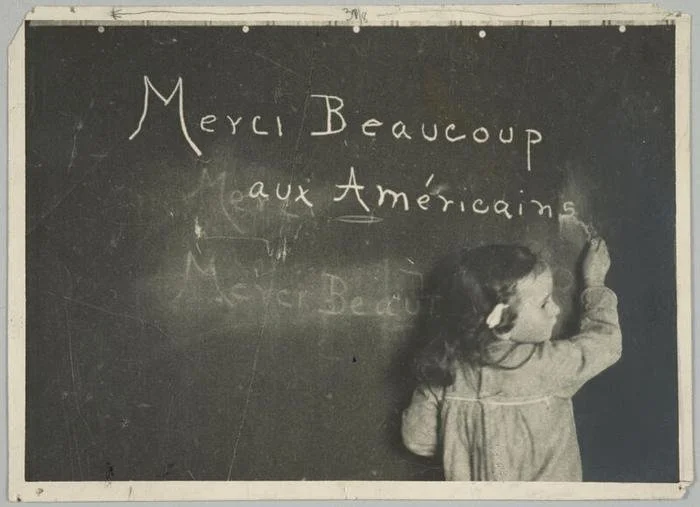
A big thank you to the Americans.
ACDF Photograph, Franco-American Museum Château DE Blérancourt
