
When Hunger Became the Enemy: Anne Morgan’s Food Relief in Wartime France
/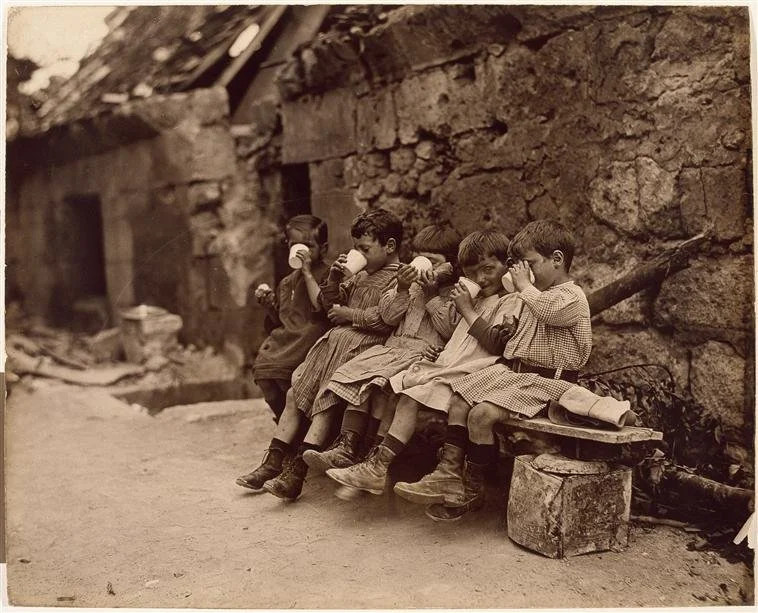
Children’s snack time in Berny-Rivière: bread and chocolate.
American Committee for Devastated France (ACDF) photograph, Franco-American Museum Château de Blérancourt
For the civilians and soldiers of northeastern France during World War I, the struggles extended far beyond the battlefield. Alongside the fighting came an invisible enemy: hunger. In the German-occupied Aisne department, the civilian population was starving.
That’s when American philanthropist and daughter of JP Morgan, Anne Morgan, along with her friend Anne Murray Dike, realized they could make a difference. Both were members of the American Fund for French Wounded, an organization that raised money for soldiers and military hospitals.
“Approximately 90 percent of the area had been destroyed,” when the first American volunteers arrived in the region in July 1917, explained Valérie Lagier, Chief Curator of the Franco-American Museum at the Château de Blérancourt, during her presentation at the 2026 Oxford Food Symposium. “People were living in the ruins of their homes and had virtually nothing to eat.” Food rations were limited to about 150 grams of rye flour, 250 grams of potatoes, and a small amount of meat. “Even the wells were polluted,” Lagier said. “Bread was available to buy, she added, “but it was expensive, and since adults and children alike were forced to work the fields for the Germans nine hours a day without pay, they had little way to earn the money to buy it."
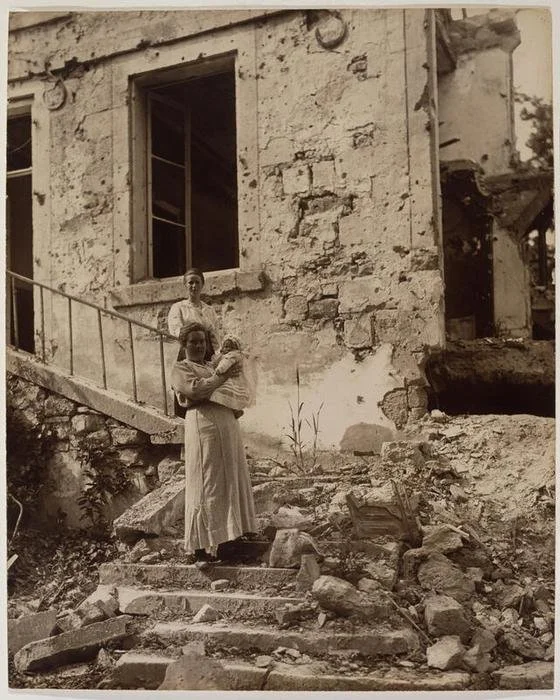
A destroyed house in Blérancourt.
ACDF photograph, Franco-American Museum Château de Blérancourt
Humanitarian access to food was the only solution to fix hunger and malnutrition.
Morgan, Murray Dike and the American women volunteers did just that, exchanging comfortable lives in America for simple barracks around the ruins of the seventeenth-century fading château of Blerancourt, damaged during the French Revolution and nearly destroyed by the war. Together, they created the American Committee for Devastated France (ACDF).
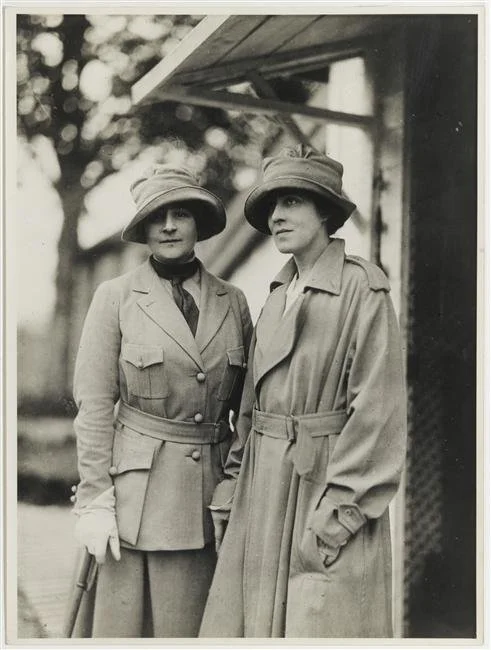
Anne Morgan and Anne Murray Dike in ACDF uniforms.
ACDF photograph, Franco-American Museum Château de Blérancourt
Having abandoned their lives in the United States to help the French population, they did so “with one of Anne Morgan’s guiding principles: help people help themselves,” Lagier said. “Their goal was not simply to feed people but to help them become self-sufficient.”
The American women provided the French people with seeds and gardening tools so they could in turn grow lettuces and potatoes. They gave them kitchen utensils to cook too. Relief packages included both food and essential goods: “shoes, or different forms of assistance. The objective was always to provide the most appropriate help.”
And the needs differed from person to person, from one family to the next. So, Morgan, Murray Dike and the American women volunteers tailored their efforts by launching a highly individualized approach to relief. Rather than distributing identical aid to everyone, volunteers assessed each family's specific needs, Lagier explained.
This philosophy also shaped the Committee's approach to relief. Not all aid was distributed free of charge: goods donated directly by Americans were provided without cost, while items purchased in the United States with donated funds were sold at approximately two-thirds of their value. “This policy was intended to foster dignity and self-reliance by allowing people to feel that they were contributing to their own recovery”, Lagier explained.
The assistance was a blessing, an American blessing, and both the providing process and the food became an expression of America's culture.
“Relief packages reflected American rather than French eating habits and included canned soup, dried and tinned beans, and sardines: foods that could be transported easily and stored without refrigeration,” Lagier said. “Children also received an afternoon goûter of chocolate, milk, bread, and sometimes biscuits, often their only substantial meal of the day. Chocolate, in particular, became a distinctly American symbol of relief.”
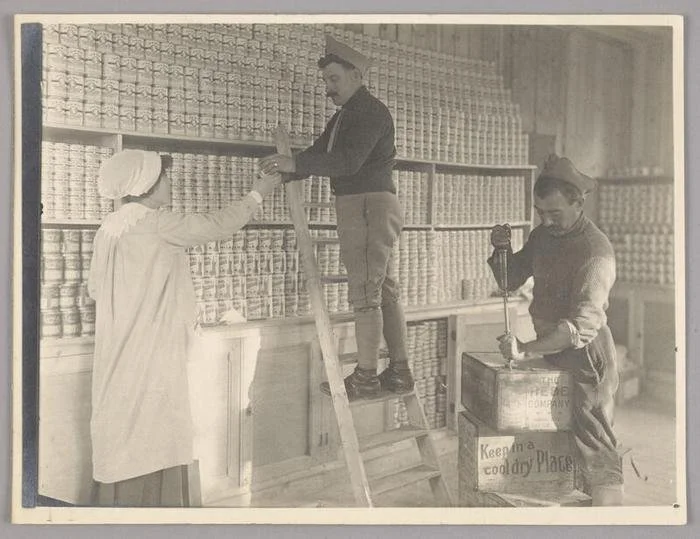
The store in Blérancourt in 1917, featuring canned goods from America: soups, corned beef, etc.
ACDF photograph, Franco-American Museum Château de Blérancourt
In March 1918, a new German offensive forced Anne Morgan and her team to evacuate the town and the surrounding villages. Nine months after they arrived in Blérancourt, the volunteers had to relocate westward through the Aisne, ultimately reaching Château-Thierry. “Once again, families found themselves on the roads with their children, as they had been in 1914. The Americans, however, did not abandon them. Under the authority of the French Army, they established mobile canteens that distributed food to refugees, civilians, and Allied soldiers alike,” Lagier added.
As food and a restored dignity were the first steps of social and human rehabilitation, rebuilding agriculture would prove equally essential.
The Franco-American Museum Chateau de Blérancourt and the American Friends of Blérancourt were honored to support the 2026 Oxford Food Symposium.
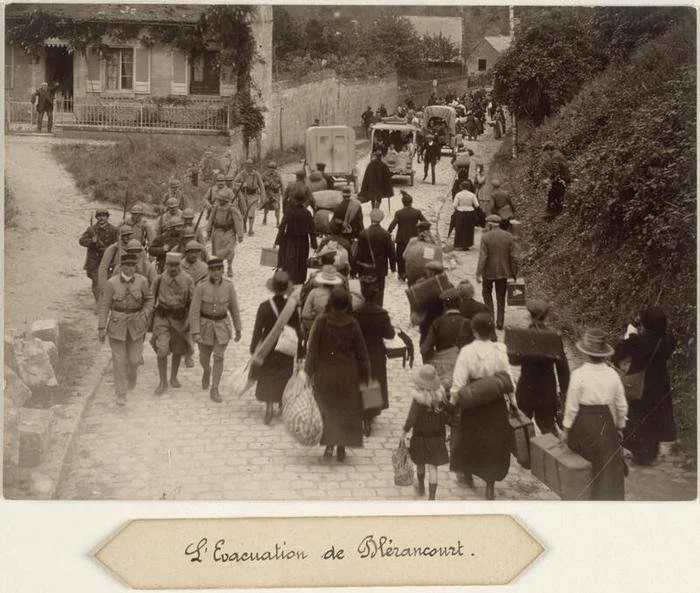
The evacuation of Blérancourt in March 1918.
ACDF photograph, Franco-American Museum Château de Blérancourt
