
The Unusual Stories of New Paintings at the Blérancourt Museum
/On the walls of the Franco-American Museum of the Château de Blérancourt are works illustrating the strength of the Franco-American relationship. Many of them had until now been the property of collectors.
This is the case of a work by Joseph DeCamp (1858-1923). Paris, 1919: the Impressionist painter born in Cincinnati, Ohio works in the Salon de l’Horloge of the Ministry of Foreign Affairs at the Quai d’Orsay. Brush in hand, he draws a rendering of the preparations for the Peace Conference, a prelude to the peace treaty signed at Versailles. DeCamp, famous for having founded the Ten American Painters, a group of American artists who admired the Impressionists, is one of the many artists approached by the members of the National Art Committee to produce commemorative paintings.
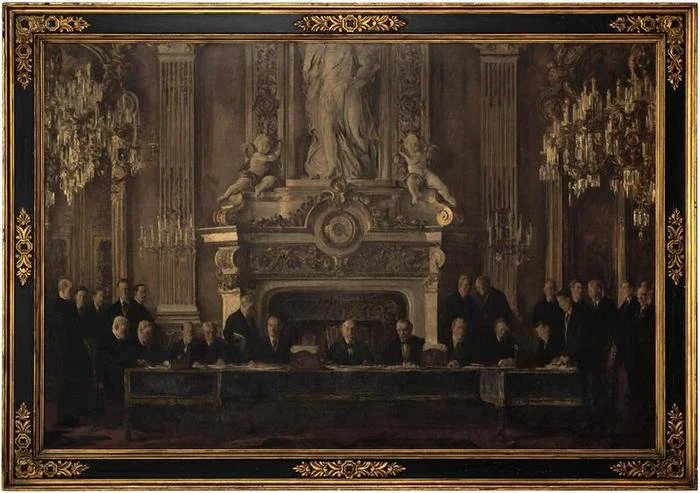
The peace conference, Joseph Decamp, Paris, 1919.
The sketch the painter is producing is devoted to the grandeur of the room, the imposing chandeliers, and a fireplace twice the size of a man and flanked by two angels. Like the characters themselves, the architectural elements are only loosely rendered, as one might expect in an unfinished work. The representatives of the Allied nations occupy the lower part of the composition. They seem overwhelmed by the ambition of their mission and by the weight of history, some seated behind a table, facing us, and, on either side, two groups standing.
In the foreground, one recognizes Georges Clemenceau, Vittorio Orlando, David Lloyd George and Woodrow Wilson. France, Italy, Great Britain and the United States, the victors of the First World War, gathered to decide Germany’s future and lay the foundations of the League of Nations. This sketch by DeCamp shows them at work with their delegations.
The sketch, however, was never developed into a finished painting.
Valérie Lagier, chief curator of the Franco-American Museum of Blérancourt, explains that the National Art Committee does not select the artwork. The unfinished work thus remained in the DeCamp family, in France. Years later, the painter’s descendants, wishing for this work to be visible to the public, donated it to the Franco-American Museum of Blérancourt.
The portrait of General Pershing painted in Paris in 1918 by the Strasbourg-born artist Léon Hornecker (1864-1924) was, for its part, purchased by the museum in 2024. Valérie explains that at that time, “The Alsatians living in the capital formed a very distinctive community: many were intellectuals, artists, and writers who had left Alsace, then under German rule, because they no longer felt at home in a region undergoing increasing Germanization.” Since Pershing had claimed Alsatian ancestors, it was this community that had commissioned the portrait from Hornecker.”
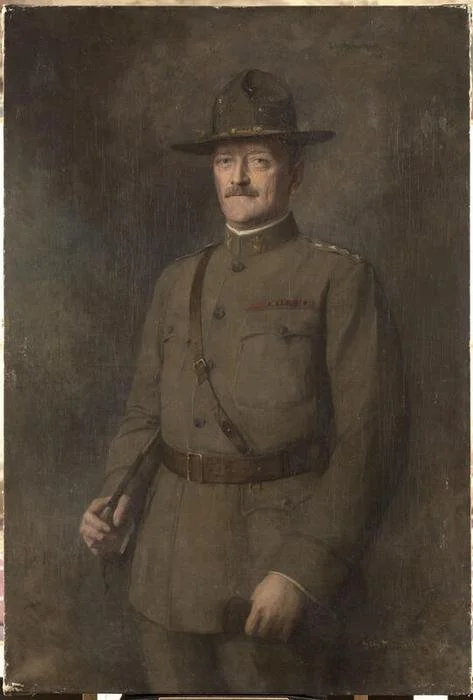
portrait of general pershing, L. Hornecker
Pershing is shown here in the uniform of the American army, wearing the campaign hat, characteristic of the “Sammies”, a nickname derived from “Uncle Sam” and commonly used for American soldiers when they arrived in France in 1917. It was at the headquarters of the American Expeditionary Forces in Paris, which later became Pershing Hall, that the general met several times with members of the circle of Alsatians in Paris, of which Hornecker was a member.
“This painting then enjoyed an extraordinary circulation: it was published in L’Illustration in 1918, then reproduced and distributed in the form of a postcard,” adds Valérie Lagier.
“And that is where another part of its history begins. We managed to acquire it for a rather derisory sum, given its importance. We then restored and framed it. Today, it is finally in its place, in Blérancourt,” explains Lagier.
The Blérancourt Museum continues its mission of acquiring works that are rare but essential to the history of a relationship born with the War of Independence and France’s recognition, the first country to do so, of the United States of America.
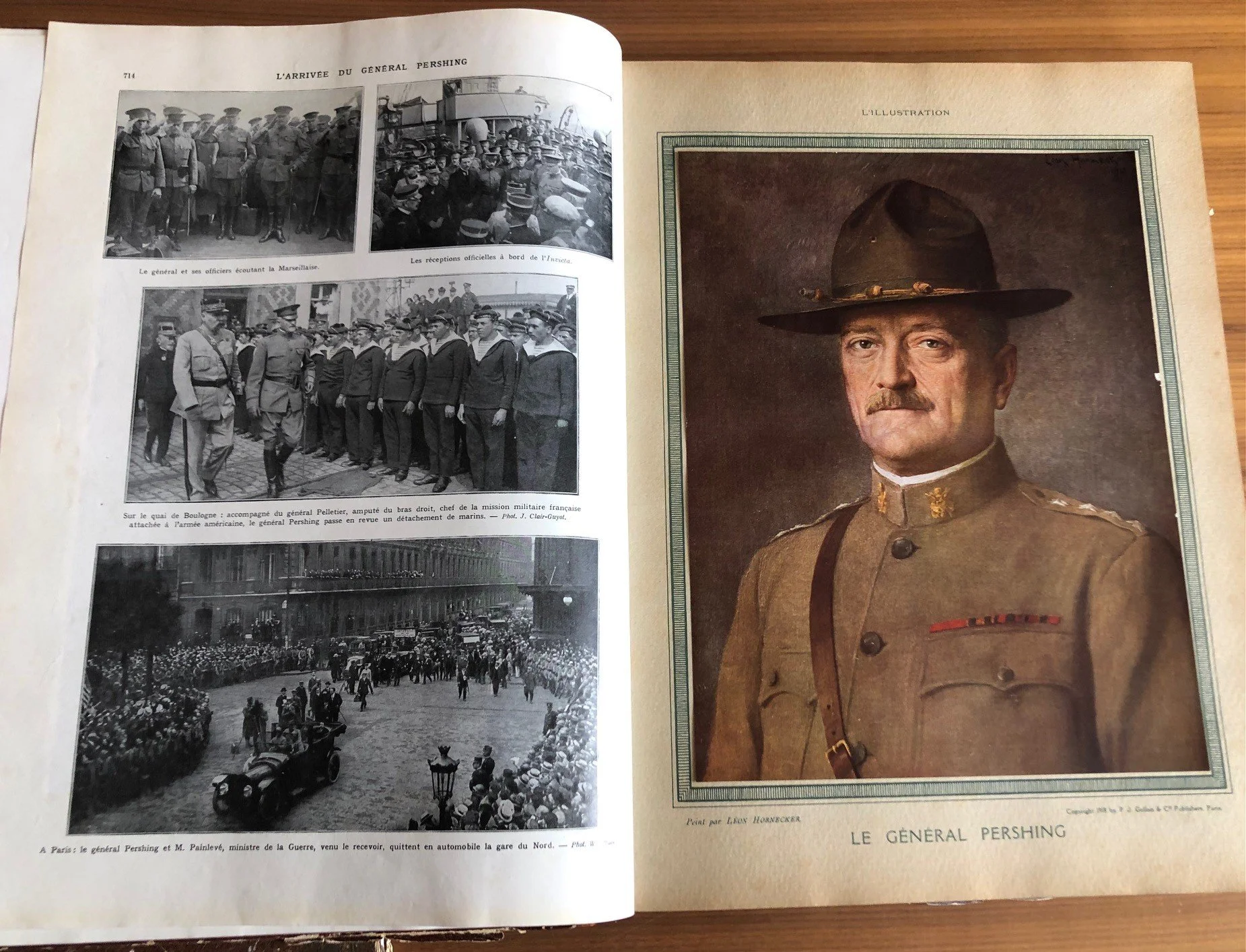
the famous portrait published in L’ILLUSTRATION.
