
Lafayette, Franklin, and the Birth of a Friendship Between Two States
/Lafayette had audacity, time to spare, and an adventurer’s spirit. When he set sail to join the insurgents in America, he wanted to fight. He thus offered Washington military expertise that was then lacking across the Atlantic.
American Friends of Blérancourt: Two hundred and fifty years ago, what pushed this young aristocrat to throw himself into the unknown?
Valérie Lagier: The taste for adventure is probably what first motivated Lafayette, as well as the other volunteers who came to swell the American ranks. Then, this crossing was also a way of existing, because what is an officer without combat? In a France that was rather peaceful, Lafayette felt that he was not serving much purpose and therefore decided to enlist.
Once there, Lafayette became very close to Washington. He even named his son Georges Washington Lafayette in honor of his spiritual father. Lafayette was also seduced by the ideas of the insurgents, by freedom, which was a new concept. He certainly saw in it a way to give momentum to his career.
These 13 states at war against the English monarchy would lay the foundations of a democracy, of a nation. A story that could not have happened without France. Moreover, in the exhibition we have the Libertas Americana medal, designed by Benjamin Franklin, which shows little America defended by France against the English leopard.
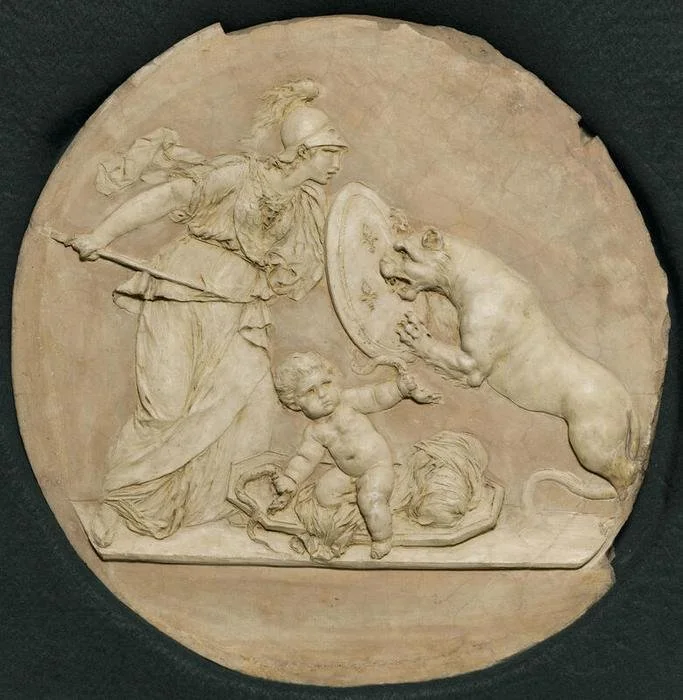
the Libertas Americana medal
AFB: A romantic epic!
VL: Indeed, through these heroes, art tells the story of this American epic. That is how these men would remain in collective memory and how the relationship between France and the United States would endure. Despite the ups and downs of history, France and the U.S. still have strong relations today.
AFB: Are these ups and downs discussed in the museum?
VL: No, this is not a museum with a political purpose. Founded by American women, it above all reflects the vision of its founders and simply recalls the bonds of friendship uniting our two countries, through the commitment of Anne Morgan and Anne Murray Dike, who were friends of France. The museum thus perpetuates this privileged relationship, born from the War of Independence through to the Second World War, an enduring symbol of a friendship that crosses time and History.
AFB: France’s other friend is Benjamin Franklin. What can you tell us about this figure?
VL: Benjamin Franklin is the most popular of Americans. Deeply rooted in our collective imagination, he seduced the French through his simplicity, his intelligence, and his capacity to accomplish himself. He became a symbol of science, letters, and politics. In fact, our Lafayette is Benjamin Franklin: the embodiment of the American dream in France, the new man of the republic, of the land of freedom.
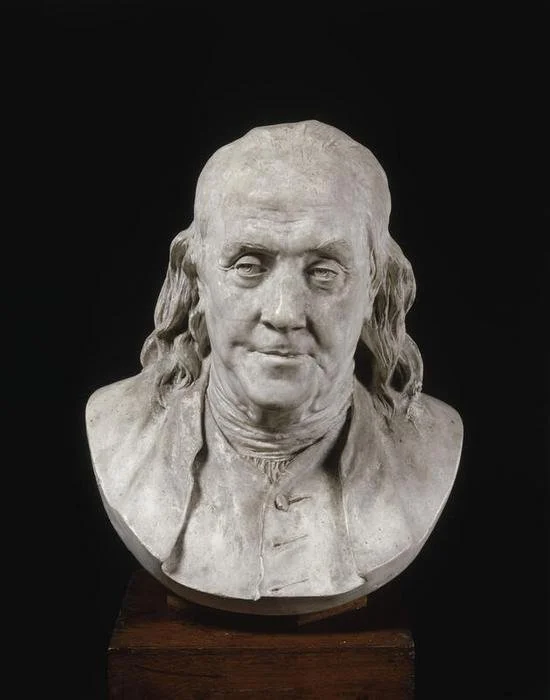
Benjamin Franklin
