
Art as a Witness to the Birth of Friendship Between France and the United States
/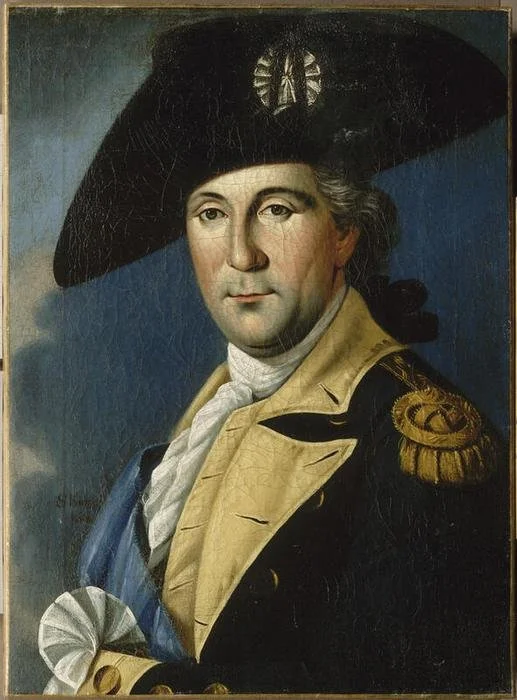
portrait of Washington by Samuel King
The United States of America will celebrate its 250th anniversary on July 4, 2026.
This milestone provides an opportunity for the French-American Museum at the Château de Blérancourt to present a new exhibition highlighting the museum’s collections related to the American Revolutionary War, the historic event that gave birth to American democracy and sealed the friendship between France and the United States.
At the entrance to the exhibition will be the preparatory drawing for a painting long believed lost, The Signing of the Declaration of Independence, a sketch of which had been presented to President Kennedy.
Preview opening on June 4, with the exhibition opening to the public on June 5 and running through October 5, 2026.
The museum’s curator, Valérie Lagier, tells us about the exhibition.
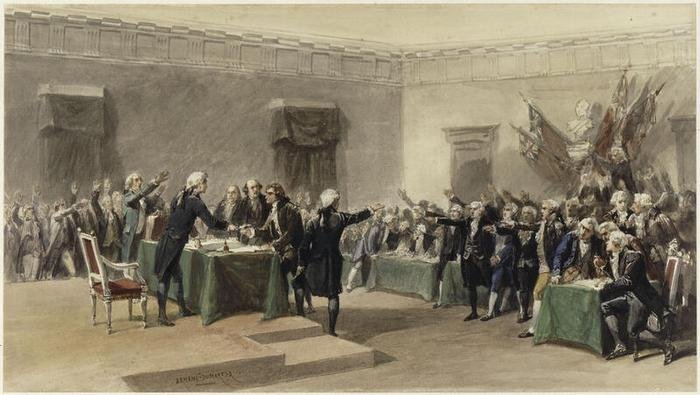
The Signing of the Declaration of Independence, Charles Édouard Armand-Dumaresq
American Friends of Blérancourt (AFB): What will visitors discover in the exhibition
Valérie Lagier (VL): During the exhibition, we will bring to the forefront works related to the American Revolutionary War that cannot be displayed permanently due to space constraints.
AFB: Is there one work in particular that stands out to you?
VL: The drawing that opens the exhibition is especially important. It is by Charles Édouard Armand-Dumaresq and depicts the signing of the Declaration of Independence. The artist was present in Philadelphia for the centennial of the Declaration during the Centennial Exposition. He created four paintings related to the history of the Revolutionary War, the first of which depicted the signing. For many years, we searched for this painting, of which only a sketch preserved at the White House and presented to President Kennedy was known. We were fortunate to rediscover the painting this year, a work more than three meters wide that was exhibited in Philadelphia in 1876 and had since disappeared.
AFB: What other works will visitors discover in this exhibition?
VL: Sculptures, paintings, drawings, and a beautiful commemorative folding screen related to the Revolutionary War. These objects were collected from the very beginning, either purchased or donated when the museum was founded.
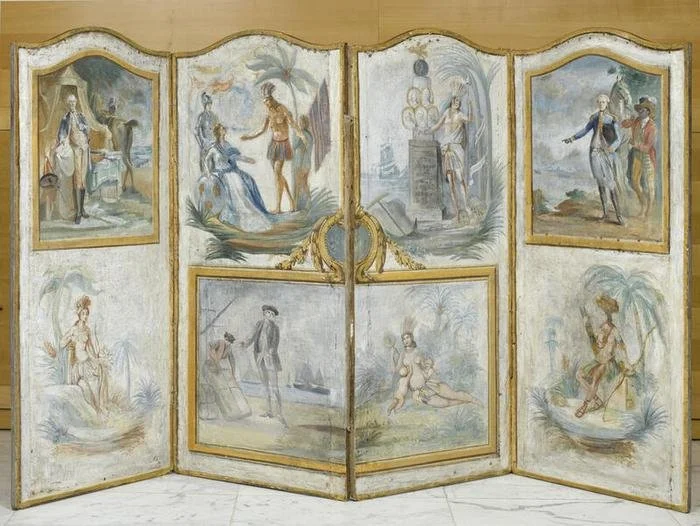
commemorative folding screen related to the Revolutionary War.
AFB: Is the history of the Revolutionary War central to the museum’s mission?
VL: When our collections were assembled, they focused on two areas: the Revolutionary War and the history of Blérancourt and its château. Many remarkable archives illustrate the participation of the French in the Revolutionary War. Among them are logbooks kept by naval officers who took part in military campaigns in America. This exhibition explores both the signing of the Declaration of Independence and the 1778 Treaty of Amity and Commerce. It also features two sculptures depicting the treaty’s signatories, one in biscuit porcelain and one in terracotta, showing Louis XVI presenting the Treaty of Amity and Commerce to Benjamin Franklin in 1778.
This treaty effectively recognized the independence of the United States, since treaties are concluded only between sovereign nations. It also recognized Benjamin Franklin in his role as ambassador. These were the first diplomatic relations between France and the young federation of the United States of America.

AFB: At the heart of this story stands a towering figure whose name is recognized around the world today: Washington. How is he represented in the exhibition?
VL: Through a portrait of Washington by the American artist Samuel King. King depicts Washington as commander of the Continental Army, wearing his military uniform. The artist was from Newport, the city where Rochambeau’s troops landed. We therefore believe that the painting may have been commissioned by a French officer who later brought it back to France, where we eventually rediscovered it.
AFB: Thank you, Valérie. Next week, we will continue your account of this remarkable exhibition that you have assembled.
