The French Hand in America's Revolution
/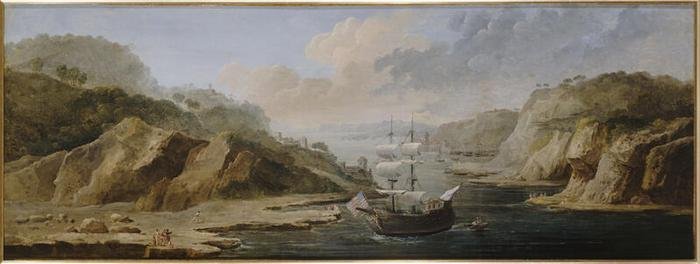
The Victoire departure by Hubert Robert (courtesy of the Franco-American Museum of Château de Blérancourt)
France's defeat in the Seven Years' War (1763) came at a heavy price: the loss of vast North American territories to Great Britain and a navy left in ruins. Yet while the map had changed, French communities across the continent held on to their language and their identity. For the French Kingdom, the humiliation carried a clear lesson: Britain's supremacy had been won at sea. Rebuilding the navy became the priority, and when the American colonies began their revolt against the Crown, France saw its opportunity.
This is how Versailles and the French supported the American War of Independence.
American Friends of Blérancourt: Valérie Lagier, what kind of support did the French give the independentists?
Valérie Lagier: The French aided the Americans in many ways: financially, and it is not often said that even before signing the Treaty of Amity and Commerce, money was lent or given to the 13 colonies. French volunteers also embarked for America to fight alongside the Independentists. First came volunteers like Lafayette, who fought in the American army. Lafayette, Noailles, the Baron de Vioménil, and Lauzun fought under the American uniform, under Washington's command. By contrast, the land forces sent by Louis XVI were under Rochambeau's command and wore a different uniform.
On the naval side, first came Admiral d'Estaing, then Admiral de Grasse, all seasoned, well-trained officers.
AFB: Was French military support truly necessary?
Valérie Lagier: The advantage for Washington in receiving these formed armies was that there were no properly trained armies in America. Washington's army was originally made up of militias, not professional soldiers.
AFB: France's support was therefore essential to Washington's victory.
Valérie Lagier: Financial, logistical, and military expertise from French officers was extremely important. It all culminates in the Battle of Yorktown, which is hugely significant, as it is this 1781 battle that brings the conflict to an end, even if fighting continues in the islands. But one can say that the English have lost. The treaty is signed at Versailles in 1783 and marks the official end of the war, even though the fighting in 1782 does not change the outcome, the United States win their independence.
AFB: When did Louis XVI get involved?
Valérie Lagier: The first battles of the war begin in 1776, and from the very start, the King of France channels money through Beaumarchais to the Americans.
AFB: Money on one hand; military support on the other. Versailles positioned itself as a key player in that historic shift and the international recognition that a new country had emerged.
Valérie Lagier: Versailles is the hub where the entire recognition of the United States as a country and as a nation plays out. It is at Versailles that these 13 colonies, which declared their independence, are recognized no longer as English colonies but as a nation, and this happens through the King of France at Versailles.
It is also at Versailles that Benjamin Franklin is received in audience, after a certain delay. Louis XVI allows him to come but waits to see whether these Americans are sufficiently credible. Had there not been a battle like Saratoga, where the Independentists win, I am not sure that Louis XVI would have committed himself.
So yes, it is at Versailles that everything is decided, where US independence is recognized.
AFB: Was Versailles's involvement more anti-English at the outset, and ultimately, the recognition of a victory and therefore of the creation of a state?
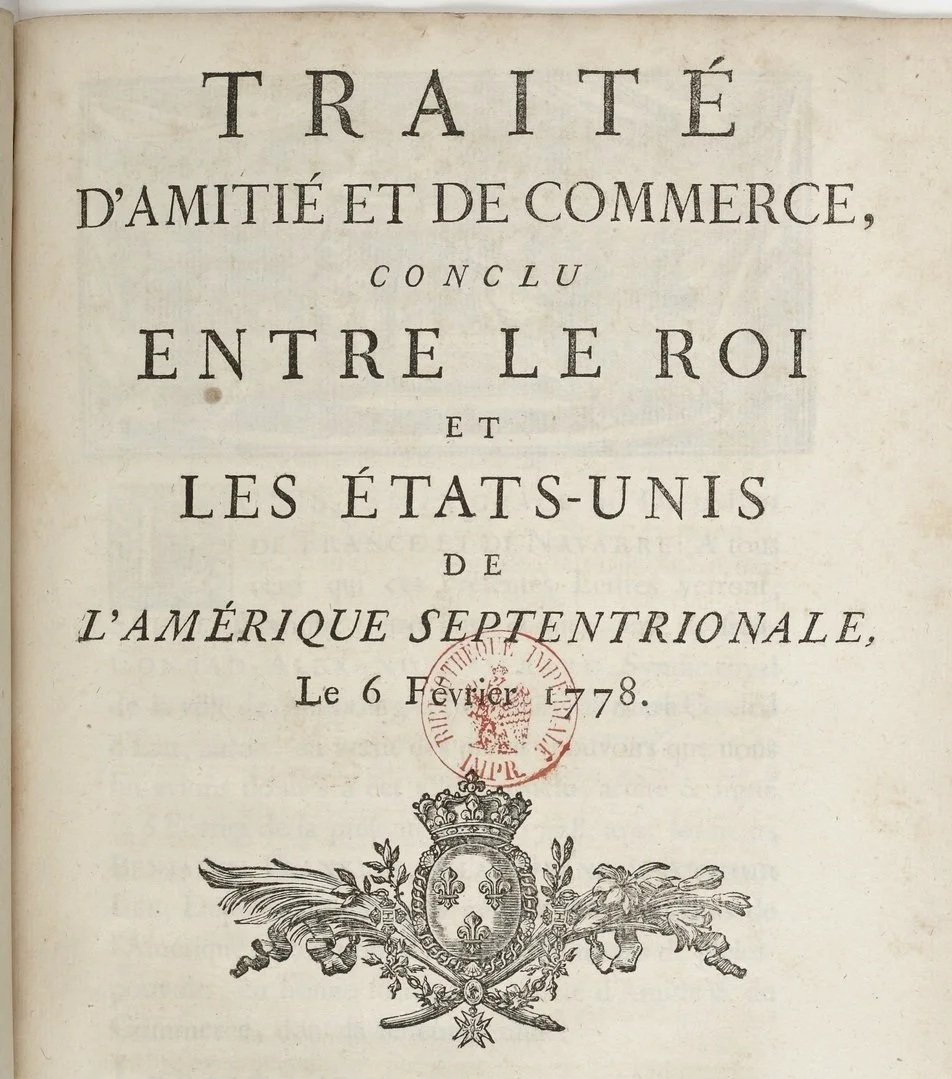
Valérie Lagier: One might always be surprised that Louis XVI, as a sovereign, could agree to recognize the independence of what was in effect a republic. Americans did not choose just any king to ally with; they chose the worst enemy of the English. The Independentists play on two fronts, trying to get from the English what they can, but with France, the equation is, 'the enemy of my enemy is my friend.' But this is not the first time a monarchy has supported rebels, especially once commerce is at stake. One must not forget that the American colonies are obliged to trade with the mother country, i.e., with England. It is therefore no coincidence that the first treaty signed is a Treaty of Amity and Commerce (the official treaty) in 1778. The Treaty of Alliance is secret. Once one enters a treaty with someone, one recognizes their independence.
AFB: As you have pointed out, Louis XVI took his time.
Valérie Lagier: Louis XVI takes more than a year to receive the envoys of the United States Congress. Benjamin Franklin lodges at the Hôtel de Valentinois in Passy and receives everyone there. This is where he holds his own court. Benjamin Franklin is enormously popular among the French. He brings a different dimension: not a wealthy aristocrat, but a self-made man, someone who started fairly low but came to be recognized, prospered, became a man of letters and a scientist, and on top of that was likeable. He even refused to wear a wig or expensive clothes.
AFB: Already, a symbol of the American Dream.
Valérie Lagier: At first, Louis XVI has no desire to give him importance, but little by little, after about a year, he agrees to receive Benjamin Franklin at Versailles. It is a strong signal. It is from that moment that one can say Louis XVI recognizes the United States. Even though he has continued to aid them financially, this is an official recognition. He also has something to gain from it: it is clearly his revenge against the English.
AFB: 150 years later, an American woman, Anne Morgan, daughter of financier JP Morgan, came to the aid of the French people during the First World War. She remembered the role of Versailles and wanted to make sure that people on both sides of the Atlantic never forgot it. This became the Franco-American Museum of Château de Blérancourt, a place forever linked to the Château de Versailles.
This will be our next conversation, dear Valérie.

Louis XVI gives Benjamin Franklin the Treaty of Amity and Commerce (February 6, 1778)
Visitor information:
Musée franco-américain du château de Blérancourt
Website Franco-American Museum of Château de Blérancourt
Place du Général Leclerc, 02300 Blérancourt, France
Open daily from 10:00 a.m. to 12:30 p.m. and from 2:00 p.m. to 6:00 p.m.
(last admissions at 11:45 a.m. and 5:15 p.m.).
Closed on Tuesdays, January 1, May 1, and December 25
About Valérie Lagier: Valérie Lagier is currently working as chief curator at the Franco-American Museum in Blérancourt. After graduating in History and Art History, she entered a national competition to become a curator and was trained in the School of National Heritage in Paris. She started her career as an Art curator in the Museum of Fine Arts in Rennes, organizing major exhibitions on contemporary Art. She was also in charge of the Educational Department, where she made innovative efforts to make art collections more accessible to museum visitors. She was part of a cooperation program between French and American museums (FRAME). Then she became Deputy Director of Studies at the National Institute of Cultural Heritage in Paris, where she oversaw the training of curators. Her two last positions were Director of the Vitré Museums and Castles and curator of Drawings at the Art Museum of Grenoble, where she organized exhibitions and wrote catalogues of the collection, especially on 19th Century Art. She has published many exhibition catalogues, scientific articles, and educational art books for adults, teenagers, and kids, especially Discover the Louvre Together and Discover the Musée d’Orsay, both published in French and English.