
From Versailles to Blérancourt: A reciprocal friendship
/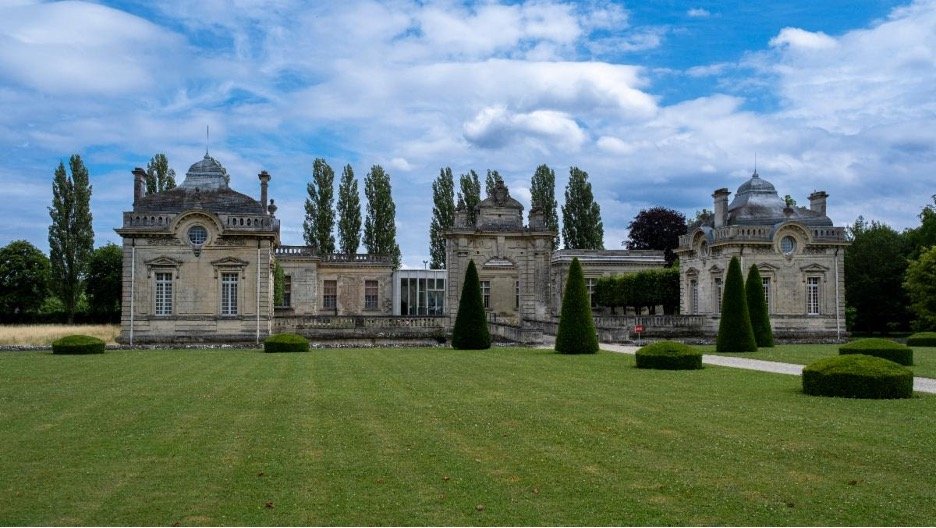
BlÉrancourt museum
Fast forward from 1776 to 1907.
In 1907, the United States counted 46 states. Arizona and New Mexico had not yet been admitted into the Union (they would in 1912), nor were Hawaii and Alaska (1959).
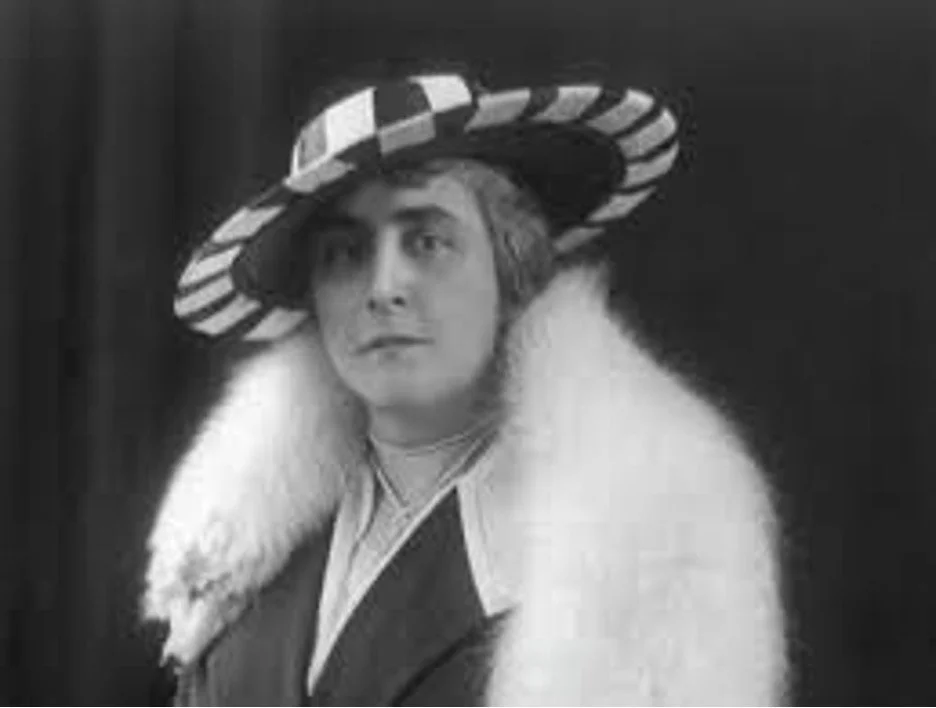
That year, an American philanthropist, Anne Morgan, visited France with two friends for the first time. She was a socialite who loved salons. Her father’s name defined an era, as hers would someday symbolize women’s leadership and American dedication to France. A banker and industrialist, John Pierpont Morgan was, alongside Rockefeller, Astor, Vanderbilt, and Carnegie, an architect of a time known in New York as The Gilded Age.
1907, the year of a great financial panic that JP Morgan almost single-handedly resolved.
1907, the year his daughter, Anne, fell in love with France.
When the First World War broke out, she was in the midst of the action with her friend Elizabeth Marbury. She decided to document conditions on the battlefields north of Paris and went back to the United States to raise money for the victims of the war.
American Friends of Blérancourt: After joining as a treasurer of the “American Fund for French Wounded,” Anne Morgan came back to France in 1916 to launch its civil section with Anne Murray Dike, which would find a home in July 1917 in the ruins of Blérancourt castle, north of Paris. In March 1918, her organization became the American Committee for Devastated France (ACDF). Once the war was over, Anne Morgan gave this château to France to be made into a museum celebrating the Franco-American friendship and history. She stipulated that it be linked to Versailles. Why?
Valérie Lagier: For a very simple reason. From 1924 onward, the two pavilions of the Château de Blérancourt were being restored with the idea of turning them into a museum. In 1924, the building of the collections began through donations and purchases, and by 1927, the collection was substantial enough to establish a national museum.
When the catalogue of the first collection was drawn up in 1928, it had two parts: 1) The History of Blérancourt, the château, the surrounding area; 2) The War of Independence.
The idea for the Americans, particularly Anne Morgan and all the American women who helped build the museum, was to recall that if they had come to help the French (not they alone, but also the volunteers of the American Field Services, the Lafayette Escadrille, and all those volunteers who had preceded the official US entry into the war), they had done so in the name of Lafayette.
AFB: Even General Pershing’s first official act in France was to pay tribute to Lafayette.
Valérie Lagier: The first thing Pershing did upon arriving in Paris was indeed to go to Lafayette's tomb. The symbolism was powerful: the Americans had come to help us because the French had come to help them. Anne Morgan wanted to recall that this Franco-American friendship, which she and all the volunteers fully embodied, had its roots in the aid the French (and Lafayette in particular) had given the insurgents in their war against the English. It was important to highlight this, which is why the first collections were built around the War of Independence.
AFB: Therefore, the link to Versailles, since it is where everything starts.
Valérie Lagier: This explains why, in 1929, when Anne Morgan donated the collections to the State (the buildings were more complicated; they were first donated to the town, then transferred to the State), she specified before a notary that she was donating these works on condition that they be attached to the Château de Versailles. The Franco-American museum was attached to the Château de Versailles for nearly 30 years. Archives about Blérancourt can be found at Versailles; all the acquisitions were made in full cooperation with Versailles, which is also why we have very substantial loan agreements with Versailles from the very beginning. This attachment made sense since we were the only two places evoking the US Declaration of Independence. Furthermore, the conditions of the donation were accepted by the President of the Republic at the time (Paul Doumer) by presidential decree and publication in the Official Gazette, stating that the Blérancourt museum was established under these conditions.
AFB: So, the War of Independence is also part of the museum experience of Versailles, which would be logical?
Valérie Lagier: At the time, there existed at Versailles a Gallery of Independence [which no longer exists but which will return to prominence when the Vergennes apartment is restored].
AFB: Was Versailles involved in the creation of the Franco-American Museum of Blérancourt?
Valérie Lagier: Yes. It is no coincidence that the museum was created under the scientific oversight of four people: the directors of the Château de Versailles, the Louvre, the National Archives, and the National Library. We were simultaneously a history museum, an art museum, a library, and an archive.
AFB: Anne Morgan also had personal memories in Versailles.
Valérie Lagier: It is true that she, herself, had a residence there that she shared with Elisabeth Marbury, the Villa Trianon, during her stay in France in 1907. She was a resident of Versailles part of the time. One might speak of an emotional attachment, then.
AFB: All these artworks carry the history that binds France to the United States, but why is this memory of history through art so essential?
Valérie Lagier: I think it is important to say that a painting or a sculpture is both a timeless work of art, meaning it can be admired in 200 or 300 years, just as it was admired at the time, with artistic qualities that far transcend its era. At the same time, a product of a specific period takes us back into the past, to a particular date, the moment of creation. A work of art, whatever it may be, has two dimensions: the artistic dimension and the historical dimension, and the Blérancourt museum addresses both.
AFB: Blérancourt: both a history and art museum?
Valérie Lagier: As one can see throughout our entire displayed collection, we are a very small history museum in the sense that we have almost no objects that have only a historical dimension. Except perhaps our ambulance, which is our only truly historically dimensional object. Otherwise, we evoke historical events through works of art. Even for the First World War, there are many works of art — paintings, drawings, photographs — objects that have an artistic dimension and refer back to a period, to an event.
We are also a fully art museum in the Gould pavilion, squarely within the realm of artistic exchange. But even for the rest of the collections, when you look at the room of ideals, they are nothing but paintings, drawings, and sculptures evoking History.
AFB: Thank you, Valérie Lagier. You are curating a dedicated exhibition for The War of Independence, which will open on June 4th, 2026. A month to the day of the 250th anniversary of America’s independence. A topic for our next conversations.
anne morgan
Visitor information:
Musée franco-américain du château de Blérancourt
Place du général Leclerc, 02300 Blérancourt, France
Open daily from 10:00 a.m. to 12:30 p.m. and from 2:00 p.m. to 6:00 p.m.
(last admissions at 11:45 a.m. and 5:15 p.m.).
Closed on Tuesdays, January 1, May 1, and December 25
Musée des Archives nationales
Exhibition: Lafayette entre France et Amérique. Histoire et légende
April 1 > July 14, 2026
L’hôtel de Soubise, 60, rue des Francs-Bourgeois, 75003 Paris, France
Open Monday to Friday from 10:00 a.m. to 5:30 p.m.
Saturday and Sunday from 2:00 p.m. to 7:00 p.m.
Closed on Tuesdays and May 1
Musée du nouveau monde
Exhibition: Les Français et la naissance des États-Unis
June 19 > November 16, 2026
10 Rue Fleuriau, 17000 La Rochelle, France
Monday, Wednesday, Thursday, Friday, Sunday, and public holidays: 10:00 a.m. to 6:00 p.m.
Saturday: 2:00 p.m. to 6:00 p.m.
Closed on January 1, May 1, July 14, November 1 and 11, December 25
About Valérie Lagier: Valérie Lagier is currently working as chief curator at the Franco-American Museum in Blérancourt. After graduating in History and Art History, she took a national competition to become a curator and was trained in the School of National Heritage in Paris. She started her career as an Art curator in the Museum of Fine Arts in Rennes, organizing major exhibitions on contemporary Art. She was also in charge of the Educational Department where she made innovative efforts to make art collections more accessible to museum visitors. She was part of a cooperation program between French and American museums (FRAME). Then she became Deputy Director of Studies at the National Institute of Cultural Heritage in Paris, where she oversaw the training of curators. Her two last positions were Director of the Vitré Museums and Castles and curator of Drawings at the Art Museum of Grenoble, organizing exhibitions and writing catalogues of the collection, especially on 19th Century Art. She has published many exhibitions catalogues, scientific articles and many education books of Art for adults, teenagers and kids, especially Dicover the Louvre Together and Discover the Musée d’Orsay together, published in both French and English.
